Building a new home comes with a lot of moving parts, and between choosing your land, sorting your finance, and dreaming about your future kitchen, it’s easy for estate guidelines to slip under the radar. They’re not the most glamorous part of the process, but understanding them early can make your selections journey a whole lot smoother.
When you purchase a block of land in a master-planned estate, you’ll typically receive a copy of the design guidelines for that estate. Think of this document as your starting point for all external design decisions. It outlines what’s required, what’s permitted, and what’s not, and knowing this before your Selections Consult means you can walk in with a vision that’s already pointed in the right direction.
If you haven’t had a chance to look at yours yet, don’t stress. These are typically available online, and our team can help you understand what applies to your block and work with you to create something you love within those parameters.
What Are Estate Guidelines?
Estate guidelines are a set of rules and requirements that govern how homes within a particular estate can be designed and built. They apply to every homesite in the estate, and they exist for good reason.
Developers invest significantly in creating estates with a particular character and aesthetic, and the guidelines are what ensure each home contributes to that vision. Think of it as everyone in the street agreeing to certain standards that protect the look, feel, and long-term value of the community as a whole. A set of statutory and policy requirements also sit alongside these to make sure critical design elements are properly managed, so a consistent standard is maintained across every new home built there. The result is a neighbourhood that feels cohesive and considered, which ultimately benefits everyone who lives in it.
What Do Estate Guidelines Cover?
Guidelines vary between estates, but most will address some or all of the following:
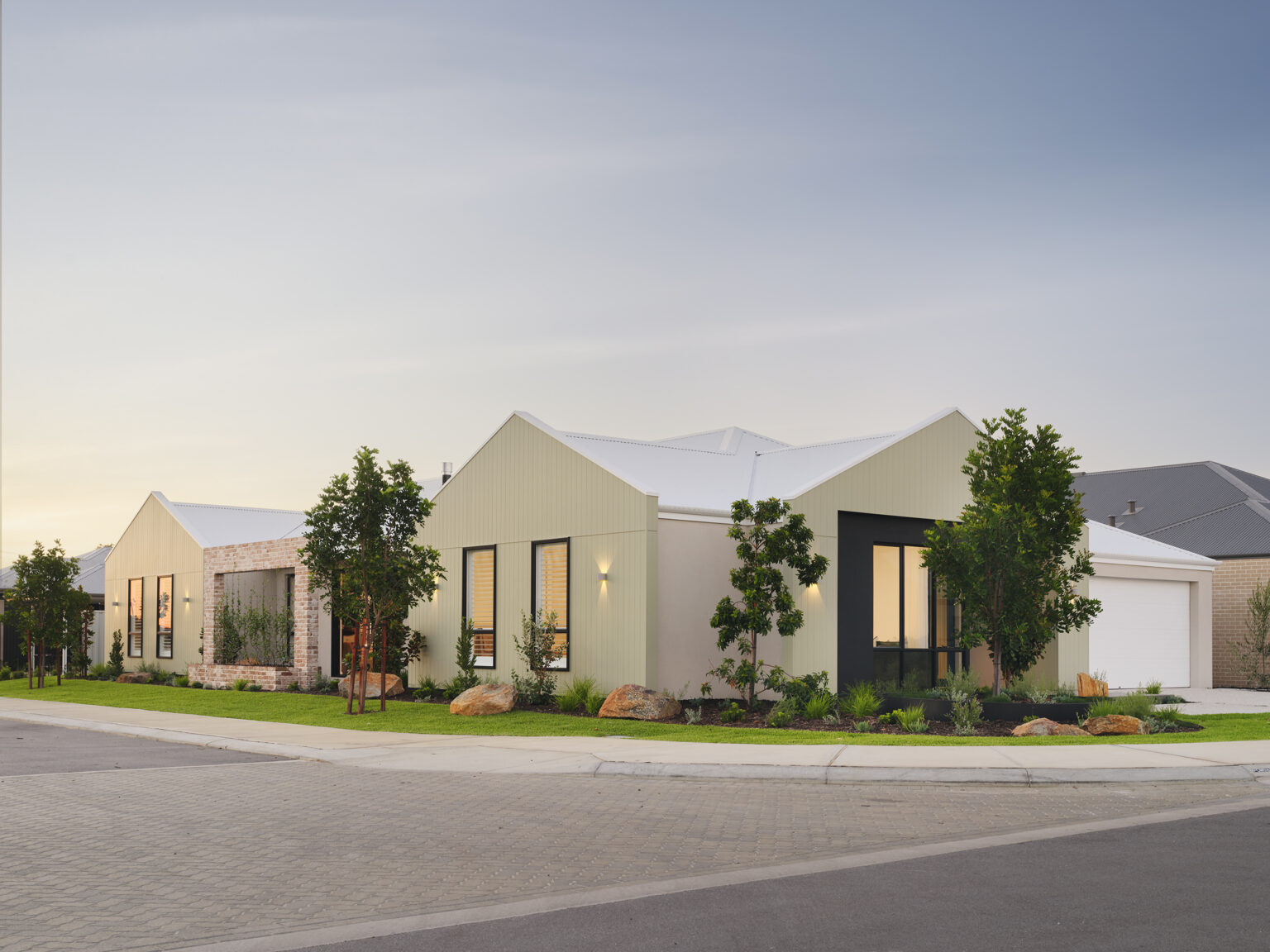
- Dwelling Appearance and Facade: this is often the most detailed section. Guidelines typically specify requirements around facade design, including how much of the frontage needs to face the street, the minimum number of materials or textures on the front elevation, and expectations around architectural detail and variation
- Building Materials and Colours: many estates specify approved colour palettes for external finishes including render, brickwork, roofing, and garage doors. This doesn’t mean every home looks the same, but it does mean certain colours may sit outside the approved range. Your Selections Consultant will be across this and can help you find combinations that work beautifully within what’s allowed
- Roof: roof pitch, material, and colour are commonly regulated. Some estates have preferences around Colorbond roof colours or specify a particular roofing profile. Worth checking early so your options are clear from the start
- Setbacks: Setbacks define the minimum distance your home must sit from your front, side, and rear boundaries. They directly influence how your floor plan can be positioned on the block, which your builder will need to adhere to
- Overshadowing and Overlooking: These requirements relate to how your home interacts with neighbouring properties, specifically how much shade it can cast and the extent to which windows or outdoor areas overlook private spaces next door. They can influence window placement and upper floor design, and your builder will manage these as part of the process
- Fencing: front fencing is often one of the more heavily regulated elements. Some estates maintain an open streetscape with no front fencing at all, while others specify materials, heights, and styles. Side and rear fencing requirements can vary too
- Retaining Walls: if your block has any slope to it, retaining walls may be required. Guidelines often specify approved materials, particularly for walls visible from the street, so it’s good to understand this before you get too far into your design
- Garages and Driveways: some estates limit the proportion of the facade a garage door can occupy, or require the garage to be set back from the main building line. Driveway materials and widths can also be specified
- Landscaping: front garden requirements are common, including minimum garden bed areas, lawn coverage, and sometimes approved plant species. Some estates also require front landscaping to be completed within a certain timeframe after handover, so it’s worth factoring this into your post-build budget
- Energy Efficiency: many newer estates include energy efficiency requirements that go beyond the standard building code, relating to insulation, glazing, orientation, or solar
- Air Conditioners: placement of air conditioning units is often restricted, particularly on frontages visible from the street
- Letterboxes and Site Services: some estates specify letterbox styles or placement, and there may be requirements around where meters and service boxes can be located on the facade. Small details, but worth knowing

A Few Things Worth Knowing
Estate guidelines are tied to the land, not the builder. This means they apply regardless of who you build with. They’re also not something that can be negotiated around, which is why we always encourage clients to familiarise themselves with their guidelines as early as possible in the process. That said, most guidelines still leave a generous amount of scope for personalisation. Working within them doesn’t mean compromising on a home you love. It just means your starting point is a little more defined, and that’s something a good team can absolutely work with.
Not every estate has design guidelines either. In some older or more established suburbs there may be no restrictions beyond standard council requirements. If you’re unsure whether guidelines apply to your block, ask your builder or land agent and they can confirm for you if they haven’t already.

We're Here to Help
Estate guidelines can feel like a lot to take in, especially when you’re already navigating so many other decisions. The good news is you don’t have to interpret them alone. Familiarise yourself with the guidelines ahead of your Selections Consult, and our team will work through them with you, help you understand what they mean for your specific design choices, and make sure everything we create together is compliant and something you’re genuinely excited about.